
The Meyer, The Lemon With a Fabulous Backstory
The Meyer lemon has always felt slightly mysterious. Sweeter than a standard lemon, not quite an orange — more like citrus with manners. And for a long time, you didn’t see them everywhere because they’re thin-skinned and don’t love long-haul shipping, which kept them out of the everyday supermarket lemon lane for decades.
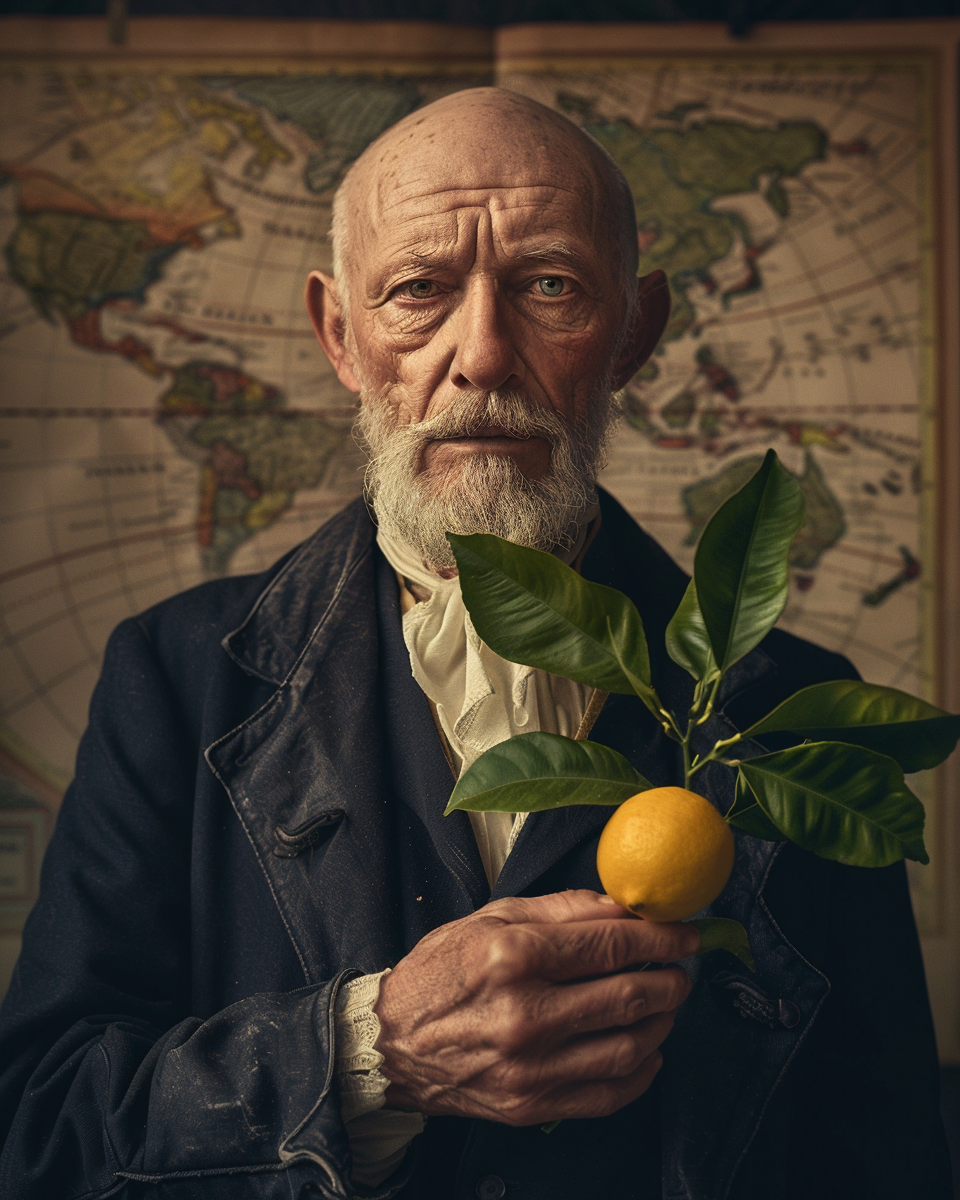
Frank Meyer was a Dutch immigrant who arrived in the US in 1901, escaping a life he didn’t want, chasing one he did. He adored plants so much he reportedly named them and spoke to them like friends — a detail that makes perfect sense to anyone who’s ever stood in a nursery talking to a tree like it can hear you.
He also loved walking — not “a nice stroll”, but the kind of walking that turns into crossing countries. He’d wander, work in nurseries, keep moving, keep looking.
That restlessness (and stamina) landed him a job that would shape the future of fruit bowls: he became a plant explorer for the US Department of Agriculture’s Office of Seed and Plant Introduction, a program built on sending botanists to find “plants of economic value”.
Meyer arrived in Shanghai in 1905, then headed inland with a translator, porters, and a guard — essentially setting off on foot through a vast landscape to collect hardy, useful plants and send them back to America.
His journals (and the retellings since) paint a life that was anything but comfortable: threats, robberies, animals, suspicion, doors closed in his face — plus the unforgettable “hotel of 1,000 bedbugs” moment, where lighting a fire meant choosing warmth and waking the bugs. (He lit the fire.)
And yet he kept collecting: soybeans, persimmons, pears, oats, asparagus — plant treasure that arrived back in the US by the railcar.
In 1907, near Beijing, Meyer noticed a small tree with bright yellow fruit sitting in a family’s doorway. He was told it was ornamental. He wasn’t convinced. He cut one, tasted it, and clocked that it was something special — sweeter than lemon, more tart than orange, and notably valued.
He sent cuttings back to the US.
That’s the moment the Meyer lemon’s modern story begins: first grown in Chico, California, then trialled and spread through other citrus regions.
for all that risk and relentless effort, Meyer wasn’t paid like a hero. He earned roughly $1,400 a year — government-worker money, not “dodging brigands while collecting citrus” money.
Over time, the world around him shifted — revolution in China, tensions building toward World War I — and he became increasingly isolated and depressed, writing of loneliness and sorrow.
In June 1918, Meyer boarded a steamer on the Yangtze River bound for Shanghai. He never made it. He went overboard at night. The USDA recorded his death as a mystery.
And somehow, in the strangest small detail of all, the villager who found him asked for Meyer’s yellow shoes. The Meyer lemon is sweet, yes.But it also carries that slightly wild edge: a citrus that was spotted in a doorway, taken seriously by a man who couldn’t stop wandering, and carried across oceans until it found its place in modern kitchens.
Acknowledgement / source: This blog was inspired by “The Mysterious Life and Death of Frank Meyer, the Man Behind Meyer Lemons” by Daniel Stone, published by VICE (25 April 2018)